Cravings
Tlalli
Mesoamerican dining in the Corazón of Ashland
Story by Andrea Jacoby O’Shell
Photography by Ezra Marcos
Comiendo el Arcoíris
As someone who grew up in the Midwest, I never fully appreciated the breadth and depth of Mexican culture and cuisine. When I took my first trip to Cabo in 2023, I didn’t have any expectations for the food. But what happened was nothing short of amazement. I felt like Dorothy in The Wizard of Oz, stepping out of her sepia-toned life and seeing in Technicolor for the first time. So, on my first visit to Tlalli, I felt transported. The second, I felt like I was coming home. By the third visit, I felt like part of the family.
Mi Casa es Su Casa
When most people think of Ashland, the Plaza in the center of town is what jumps to people’s minds. But just a half-mile south is Ashland’s Railroad District. A historically significant part of Oregon’s history where the “Golden Spike” was driven, conquering the Siskiyou Mountains. A part of the story that doesn’t often get told is of the thousands of Chinese immigrants who resided on A Street and Second Street, building the railroads, making unlivable wages, and risking their lives for the American dream—an important reminder of how we all got to where we are today, lest we forget. Over a century later, the Railroad District is filled with thriving businesses and historical homes.
One of those thriving businesses at 542 A Street is Tlalli. Bursting with inviting shades of Mexican pink and jade green, Indigenous Chicano artwork, and lively Latin music, Tlalli owners Freddie and Manya Herrera have breathed new life into the space, bringing a deeply rich sense of place and Mesoamerican cuisine, drinks, and culture to the people of Southern Oregon. Manya and Freddie are no strangers to Ashland. For over a decade, they have been a longstanding part of the community. They have poured themselves into the art, culture, and people. “Freddie and I have been raising our family here for the last ten years…Freddie helped to open and create the bar program at Hearsay and was a part of the Oregon Shakespeare Festival as well,” says Manya. She herself is a staple in the community. Manya has two master’s degrees in writing and art, and was a professor of writing at Southern Oregon University. Her first poetry collection, Legalize my Mother, will be published in summer 2026. “What stands out about Tlalli is the art everywhere… Our space was created to celebrate Latino/Indigenous culture in this area, and we are very proud of that,” Manya says, beaming.
La Familia
At the core of Tlalli is their family. And that’s how their restaurant operates: a body, each part necessary to support the other. With over 20 years of restaurant experience, Freddie and Manya know what it takes to work together and build something. “Freddie and I have a big, beautiful blended family! The teenagers work at the restaurant or babysit our five-year-old son Quetzalli while we introduce Ashland to the bold and exciting flavors of Mexico and Central America,” says Manya. This feeling resonates throughout the restaurant as soon as you reach the front doors. Manya herself often greets you, and Freddie is usually behind the bar mixing up one of his bespoke cocktails. They both grew up in California, steeping themselves in their Latin heritage. “I was lucky to visit my family’s village in Jalisco, Mexico, many times, and I cherish the memories of devouring roasted corn with chili, freshly cut sugarcane, drinking tejuino (a fermented drink made from masa), licking sticky fingers covered in tamarind sugar, always surrounded by the rich color of bougainvillea, my grandmother’s favorite flower,” she recalls while smiling ear to ear. Freddie is Guatemalan and Salvadoran and grew up in Los Angeles, experiencing the rich melting pot of Latin American culture. “Our upbringing made us feel deeply connected to our Mesoamerican roots; Mexico, Guatemala, and El Salvador always calling us home.”
La Comida y Las Bebidas
Upon entering Tlalli, you are greeted by a stunning L-shaped bar, Freddie usually laughing and shaking up a custom cocktail, framed by Jade-colored brick and gold accents. Glass shelves support ancestral bottlings of Mezcal and Tequila alongside delicate glassware and handmade stoneware; each vessel carefully selected to support its custom concoction.
If you’ve had the pleasure of enjoying a cocktail by Freddie, you know how special they are. “When I create a cocktail, I don’t really start with an ingredient, I start with a memory,” he says. “I’ll usually begin with the foundation of a classic cocktail because those recipes have earned their place. Then I ask myself, ‘How do I make this feel like home?’” Once he brings all the components together, you receive a delectable, memorable cocktail. The precision of the ingredients is balanced by fun and whimsy; their signature cocktail is named Tropical Ass Bitch.
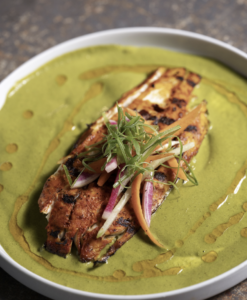
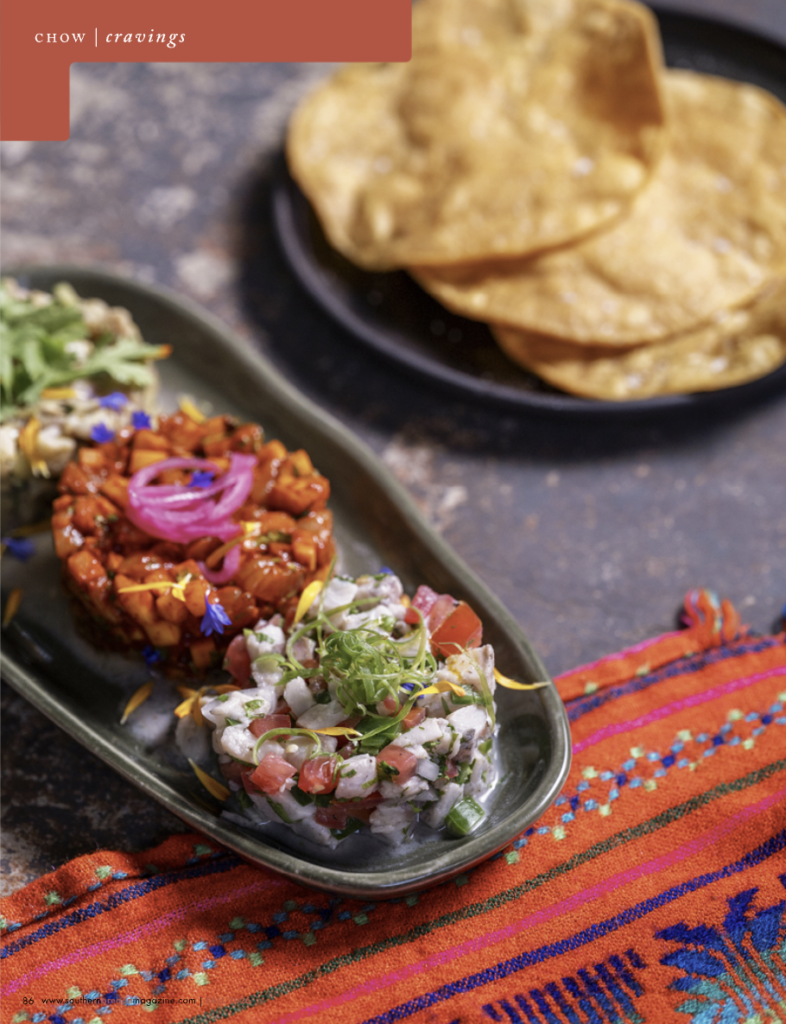
Once seated, either at a cozy table indoors or on the beautiful outdoor patio, a friendly face will offer you Salsa y Tostadas to start. Say yes. A color wheel of salsas arrives, and they will shape the rest of your meal, inviting you to play with and enjoy all the different flavor profiles and ranges of spice. Friend and Executive Chef Octavio Nunez and Sous Chef Jahir were key in honing the menu. “Our concept has always been deeply rooted in Mesoamerican culture and memory,” says Manya. The menu is all about quality, not quantity. Every dish is exceptionally executed, and every ingredient is fresh, down to the homemade, organic, and pink tortillas.
The dishes are transformative. From making homemade tortillas at the Grower’s Market to writing and publishing poetry, the Tlalli story is complex and beautiful, just like their food and drinks. It’s also an immersive and educational experience. “Most people don’t recognize that Mexican and Central American cuisine is actually indigenous food traditions that have survived more than 5,000 years,” adds Manya.
La Madre de Familia
The heart of Tlalli is strong and feminine, inspired by all the abuelitas that came before them. “Tlalli is about honoring the earth, our ancestors, our abuelitas’ cooking, and all the knowledge and stories that have been passed down generation to generation,” Manya says. This blooms through all aspects of the restaurant, including the beautiful pink color that fills the restaurant. Known as “rosa mexicano,” it is seen and beloved throughout the country, referencing the indigenous cochineal dyes and the color of the beloved bougainvillea flower. Strong but soft.
The Herreras initially received some pushback against their business, warned to avoid “tacky Mexican colors,” but they didn’t shy away from their vision. “As a Mexican American, I’ve always been super connected and super proud of the colors and the vibrant energy so many Mexican artists are able to capture,” Manya states. “The color pink is a gentle form of resistance for me, in a world of beige, I will choose Mexican Pink over and over again.”
Tlalli is an ancient word from the indigenous Náhuatl language, the most widely spoken indigenous language of Mexico since the seventh century, meaning Land or Earth. Sacred and all-encompassing to the restaurant and the space. “My mother, who is Purépecha from Michoacán, raised me to develop a relationship with my food, with the campesinos (farmers) who grow and harvest our ingredients, and la madre tierra, the sacred earth that sustains us, Tlalli,” Manya muses.
Trabajemos Juntos
The community aspect and working together are an important part of Tlalli. They support community artistry, support other local restaurants, and disrupt the norm—they push back against the naysayers. “I’ve always believed there’s enough room at the table for everybody. I love collaborating with other chefs and restaurants because that’s where the magic happens,” Freddie says with conviction. This perspective is truly the voice we need now more than ever.
So, if you’re yearning for a sense of place, a reason to celebrate life, or simply just be, the Tlalli Familia reminds us, “Every single person who walks through our door is a part of our dream, we see you, we honor you, we thank you. Thank you for being in community with us. Tlazocamati. (Thank you – in Náhuatl).”