(Summer Cover and Above Photo Victoria Ditkovsky)
Adventure
Where the Rivers Still Run Wild
Oregon’s Wild Rivers Coast offers a different kind of summer—one shaped not by crowds or itineraries, but by the rhythm of water, forest, and open sky.
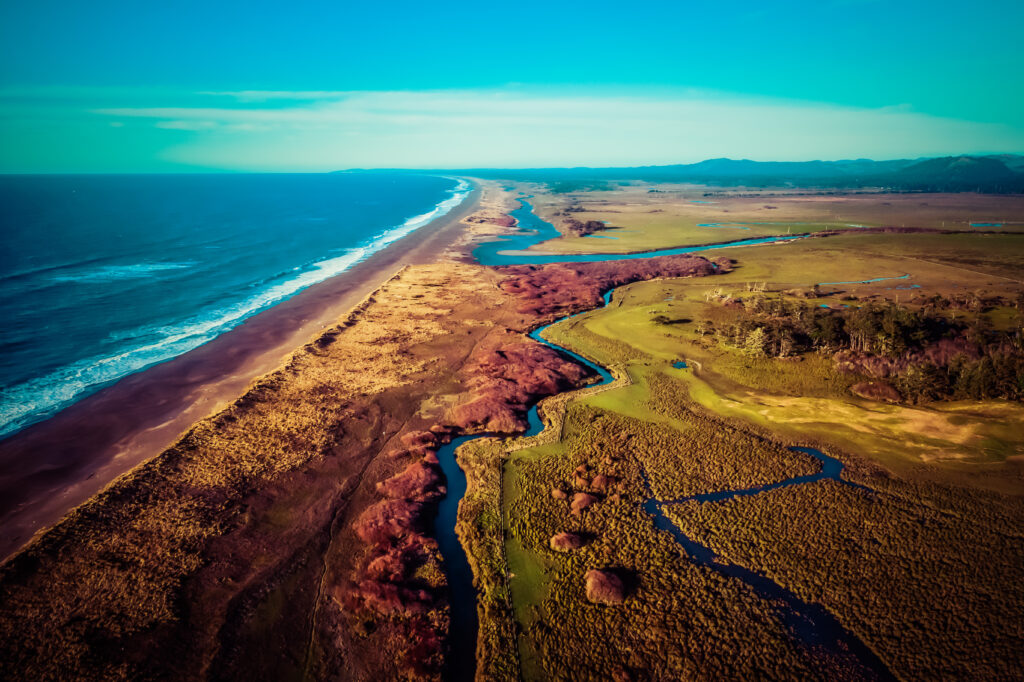
There’s a moment—standing at the edge of the Pacific in Gold Beach where the Rogue River meets the ocean—when it feels like watching two worlds collide.
Behind you, fresh water has traveled hundreds of miles, through mountain snowmelt, narrow canyons, and dense forest. In front of you, the Pacific stretches outward, vast and uncontained. The meeting point isn’t dramatic in the way people expect. There’s no line in the sand, no clear division. Just movement. A quiet blending. A reminder that not everything needs to be defined to be understood.
This is Oregon’s Wild Rivers Coast.
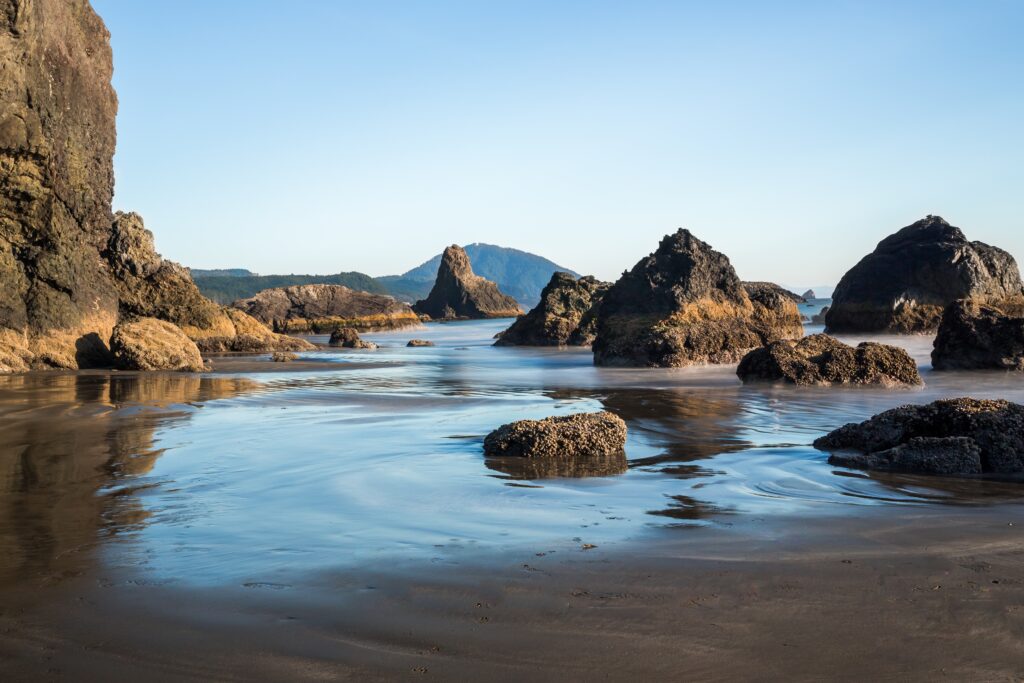
While much of the West leans into summer with heat and intensity, the Southern Oregon coast moves differently. Mornings arrive softly, often under a blanket of coastal fog that lifts slowly to reveal stretches of rugged shoreline, sea stacks rising out of the surf, and forests that seem impossibly green for this time of year. The air carries a coolness that invites you to stay a little longer, breathe a little deeper, and let go of the pace you brought with you.
It’s not a place that asks for a checklist. It’s a place that rewards attention.
The Wild Rivers Coast is defined, in part, by its namesake. This region is home to some of the most pristine river systems in the country, federally designated Wild and Scenic Rivers that remain largely untouched by development. The Rogue River is the most well-known, drawing visitors for everything from world-class fishing to jet boat excursions that trace its path inland.
But it’s only one part of a larger network that includes the Illinois, the Chetco, the Smith, the Elk, and the Sixes, each with its own character, each shaped by the landscapes it moves through. What these rivers share is a sense of continuity. They are not controlled or redirected to fit around the experience of the visitor. Instead, the experience is shaped around them. You feel it in small ways. In the clarity of the water along the Illinois River, where sunlight filters through trees and reflects off rock in a way that feels almost unreal. In the steady movement of the Chetco, known for some of the cleanest water in the state. In the quiet stretches of the Sixes River, where the absence of noise becomes something you notice and begin to appreciate. These are places where the natural world still sets the terms.
(photo by Manuela Durson)
And along the coast, that same sense of scale and independence carries through. From the dramatic viewpoints of Samuel H. Boardman Scenic Corridor to the working waterfronts of Port Orford (one of the few remaining ports in the world and the only one in the U.S. where boats are launched by crane) the coast reveals itself as a modern marvel of ingenuity and wild beauty.
Even the beaches feel different here. Driftwood gathers in large, weathered formations. Tide pools reveal entire ecosystems in just a few feet of space. And the ocean itself demands attention—not in a way that feels threatening, but in a way that reminds you it deserves respect.
All of this is part of what defines the experience of this place. There’s an understanding, often unspoken, that access comes with awareness. That the same forces that make this coastline beautiful also make it dynamic, and at times unpredictable.
For visitors, that awareness becomes part of the connection. You slow down. You watch the water a little more closely. You notice where you step, what you leave behind, how the landscape responds to your presence. And somewhere in that shift, the experience becomes less about seeing a place and more about being in it. That connection extends beyond the landscape and into the communities that call this region home.
Brookings, Gold Beach, and Port Orford—each offers its own perspective on life along the edge of Oregon. They are working towns, shaped as much by industry and resilience as they are by scenery. You’ll find fishermen heading out before sunrise, small businesses built on generations of local knowledge. And a creative spirit that shows up in unexpected ways, from coastal art galleries to seasonal festivals that bring people together in ways that feel genuine, not staged.
There’s a sense of independence here, but also of shared identity. A recognition that while each community is distinct, they are connected by the same coastline, the same rivers, and the same responsibility to care for both. That balance between use and preservation, between access and respect is part of what allows this place to remain what it is.
Because the truth is, places like this are becoming harder to find. Not untouched, not undiscovered, yet still grounded in something real. A morning hike through coastal forest. An afternoon watching the tide shift along a quiet stretch of beach. An evening where the only real plan is to stay long enough to see the light change over the water. These aren’t headline experiences. They are lasting ones.
In a time when travel often feels driven by urgency—the need to see more, do more, capture more—this stretch of coast offers something quieter, and arguably more meaningful. It reminds you that not everything needs to be optimized. That some places are best experienced without a schedule. That there is still value in letting the day unfold without knowing exactly where it will lead.
On the Wild Rivers Coast, summer isn’t something you chase. It’s something you settle into. And if you’re paying attention, even just a little, you may find that the most memorable part of the experience isn’t any single place you visited, but the feeling of being somewhere that still knows exactly what it is.
And has chosen to stay that way.